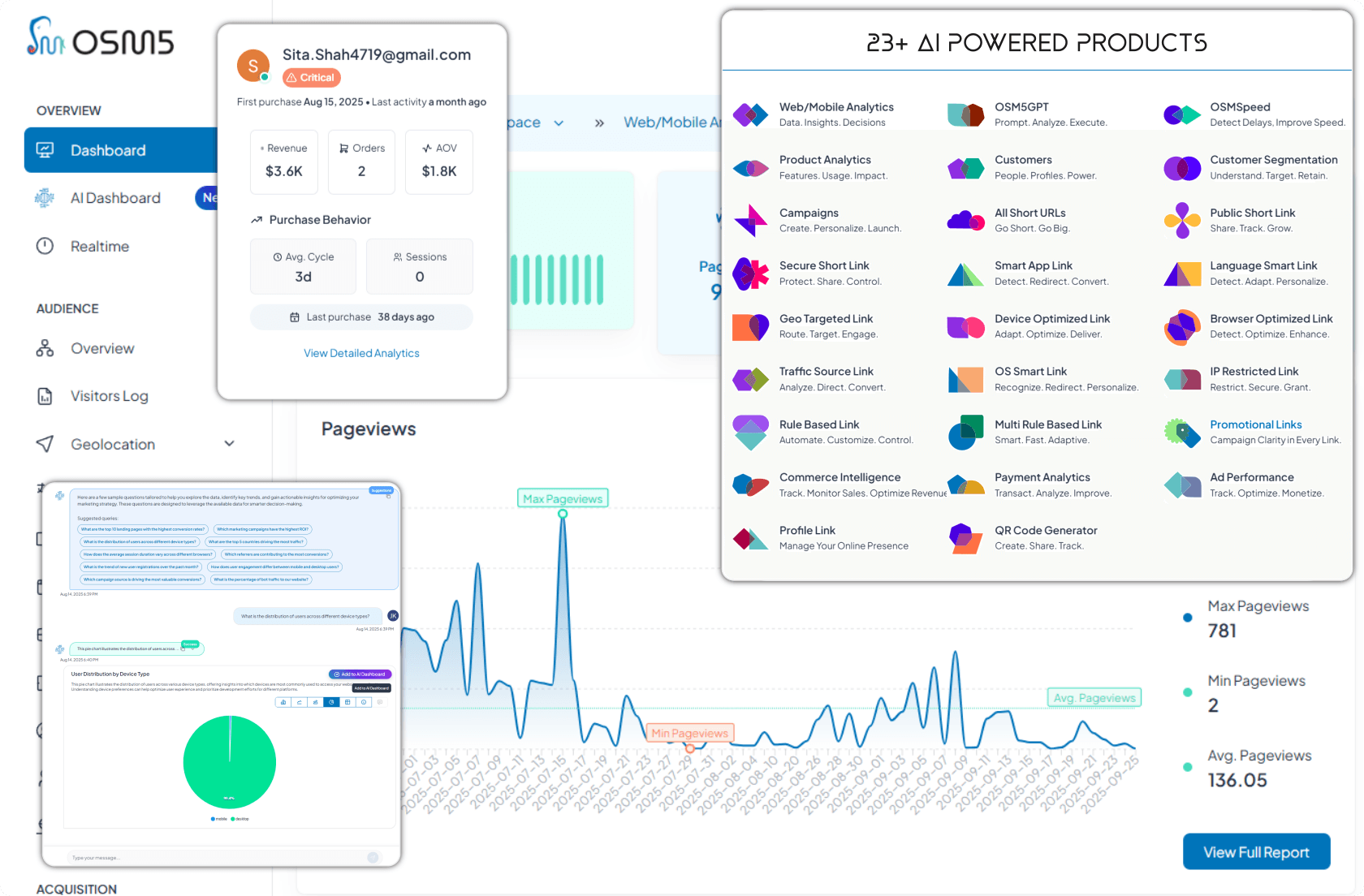
Why Cookie-Less Tracking Is the New Standard in 2025
The Future of Web Analytics
Date
Nov 14, 2025
Author
Ramya Balla
Web analytics is undergoing the biggest shift in its history.
Cookies the foundation of digital measurement for over two decades are disappearing. And in 2025, cookie-less tracking isn’t just a trend anymore… it’s the new standard.
✔ Privacy laws have changed.
✔ Browser rules have changed.
✔ User expectations have changed.
✔ And analytics must change with them.
If your analytics still relies on cookies, cross-domain identifiers, fingerprinting, or third-party syncs, you’re already behind.
This is why cookie-less analytics is taking over and why businesses that adopt it now will gain a massive competitive advantage.
Let’s explore what the future looks like.
🔥 1. Cookies Are Dead And They’re Never Coming Back
Over the past three years, every major browser and regulatory body has shut the door on cookies:
Safari: blocks all third-party cookies
Firefox: blocks tracking cookies by default
Chrome: phasing out third-party cookies globally
GDPR + CCPA + global privacy laws: restrict identity tracking
Users: increasingly reject cookie banners
What this means:
❌ No reliable user tracking
Safari and Firefox users were already invisible for years.
❌ Funnels break
One person becomes “five new users” across sessions.
❌ Attribution becomes inaccurate
Campaign performance can't be measured properly.
❌ Retention becomes misleading
Users appear as “new” every time they return.
❌ Consent drops data by 30–50%
Half your traffic becomes “no insight” traffic.
Cookies didn’t just become outdated they became a liability.
🍪 2. Why Cookie-Less Tracking Works Better
Many assume that without cookies, analytics gets weaker. The truth?
Cookie-less tracking is MORE accurate when done right.
Modern privacy-native analytics can:
✔ Track sessions without cookies
Using event-driven and heuristic session logic.
✔ Identify behavior across time (anonymously)
Without storing personal identifiers.
✔ Provide device-level intelligence
Without tracking users individually.
✔ Understand funnels, engagement, and journeys
Without relying on browser storage.
✔ Maintain accurate numbers even with 100% Safari traffic
Something cookie-based tools cannot do.
Cookie-less analytics is not a downgrade it’s the modern upgrade analytics needed.
🔐 3. Privacy Laws Demand a New Tracking Standard
GDPR, CCPA, and upcoming global laws require:
Clear consent
Transparent tracking
No hidden identifiers
No cross-site data sharing
No silent fingerprinting
No intrusive cookies
User-controlled identity modes
Audit-ready tracking infrastructure
Legacy tools weren’t built for this world. But modern cookie-less platforms:
✔ Follow your organization’s data rules
(You control what is captured)
✔ Offer Anonymous / Partial / Full identity modes
(No engineering changes)
✔ Avoid shared cookies entirely
(Each domain stays isolated)
✔ Provide complete audit logs
(Every identity event is traceable)
✔ Work even when users decline consent
(Anonymous behavioral analytics)
Simply put:
Privacy-first analytics is the only analytics that will survive the next decade.
⚡ 4. Browser Intelligence Has Replaced Cookies
Browsers now do heavy lifting that cookies used to do but in a safer, more transparent way.
Modern browsers provide signals like:
Navigation timing
Paint metrics
Resource timing
Interaction timing
Performance entries
Core Web Vitals
These allow analytics platforms to measure:
📈 Speed
💥 Errors
🧭 User journeys
🧵 Events
🔁 Sessions
🔍 Engagement patterns
all without needing cookie storage at all.
Cookie-less analytics is not guesswork.
It is powered by modern browser APIs specifically built for this new era.
🧠 5. AI Makes Cookieless Analytics Even Smarter
Without cookies, analytics becomes:
Behavior-focused
Event-driven
Contextual
Identity-optional
Which is exactly what AI is best at.
Modern AI-driven analytics platforms can:
✔ Predict churn without needing identity
✔ Explain conversion drops
✔ Find patterns in anonymous behavior
✔ Compare cohorts automatically
✔ Detect anomalies in real time
✔ Attribute revenue based on behavior
✔ Generate insights from raw events
AI transforms raw, cookie-less behavior data into:
Clear answers
Instant charts
Insights you can act on
Recommendations based on patterns
The future is not cookie-based dashboards.
The future is AI analysts that explain your data instantly.
🤝 6. Cookie-less Doesn’t Mean Identity-less
The biggest misunderstanding is:
“Cookie-less = We can’t know anything about our customers.”
Not true.
Cookie-less simply means no cookies.
You can still use:
✔ Policy-controlled user identity
(based on your privacy rules)
✔ First-party event-based identity
(No cross-site tracking)
✔ Optional login stitching
(Only with consent)
✔ Anonymous behavioral profiles
(Full behavior, zero personal data)
Identity isn’t removed.
It’s redefined in a way that respects user privacy and compliance.
🚀 7. Why 2025 Is the Year Cookieless Becomes Mainstream
Three forces collide this year:
Chrome ends third-party cookies globally
This removes the last major source of cookie-based tracking.15+ new privacy laws launch worldwide
APAC, Middle East, LATAM, and US states join EU.AI-led analytics platforms take over
Teams expect insights instantly, not dashboards and spreadsheets.
2025 is not the transition.
2025 is the final shift.
If your analytics isn’t cookie-less by now, you’re behind.
🎯 8. Final Thoughts: Cookie-less Is the Future and the Present
The companies winning in 2025 are the ones that already realized:
Cookies are dead
Privacy is non-negotiable
AI is the new analyst
Cookie-less tracking is more accurate
Identity must be policy-controlled
Real-time insights drive growth
Compliance is part of strategy, not a blocker
Cookie-less analytics isn’t a workaround.
It’s the new foundation of digital intelligence.
If you want accurate insights, compliant tracking, and fast decisions the future isn’t cookie-based.
The future is cookie-less.
More Articles




Our Blog
Blog
Insights and strategies to boost productivity, collaboration, and smarter task management.